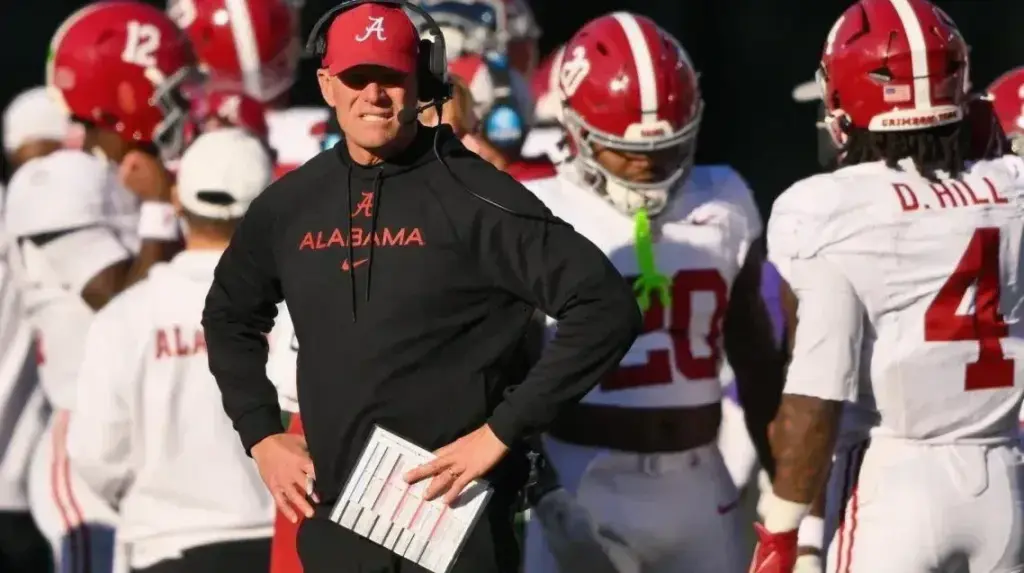
The latest College Football Playoff rankings have sparked a firestorm of debate, leaving many to wonder if the selection committee is operating under two different sets of rules depending on which jersey a player wears. At the center of the controversy is Alabama, which managed to hold steady at number three despite seeing every single SEC opponent it defeated this season suffer losses over the weekend. This lack of movement stands in stark contrast to how Indiana was treated just a week ago, when the Hoosiers plummeted five spots under nearly identical circumstances. While nobody is questioning whether the Crimson Tide belongs in the playoffs, the refusal to budge suggests a level of favoritism that defies basic mathematical logic.
The disparity becomes even more glaring when comparing Alabama to Texas. On paper, the Longhorns possess a superior resume, boasting more top twenty five wins and leading in critical metrics like strength of record and game control. Texas has handled heavy hitters such as Tennessee and Ohio State, yet they remain stuck behind Alabama because the committee prefers the Tide’s consistent margin of victory. According to CFP chair Hunter Yurachek, Alabama’s ability to dominate by large point spreads outweighs Texas’ stronger list of quality wins. By prioritizing the eye test and blowout scores over actual opponents beaten, the committee risks ignoring reality in favor of brand name prestige.
Meanwhile, other teams find themselves caught in a puzzling sorting process. Indiana remains significantly undervalued despite a convincing win over USC; while their non-conference schedule lacks teeth, their defensive dominance makes them look like legitimate contenders who were unfairly punished in previous polls. Conversely, programs like South Carolina remain inexplicably ranked despite mounting losses and embarrassing blowouts, fueling suspicions that SEC teams receive a permanent safety net regardless of performance. From Ohio State climbing for a mediocre win to four loss teams clinging to ranked status, the current standings feel less like an objective evaluation and more like a series of contradictions.